

If you’re craving real Korean flavor, this spicy korean tteokbokki recipe delivers it without unnecessary fuss. Here’s everything you need to make it right at home.
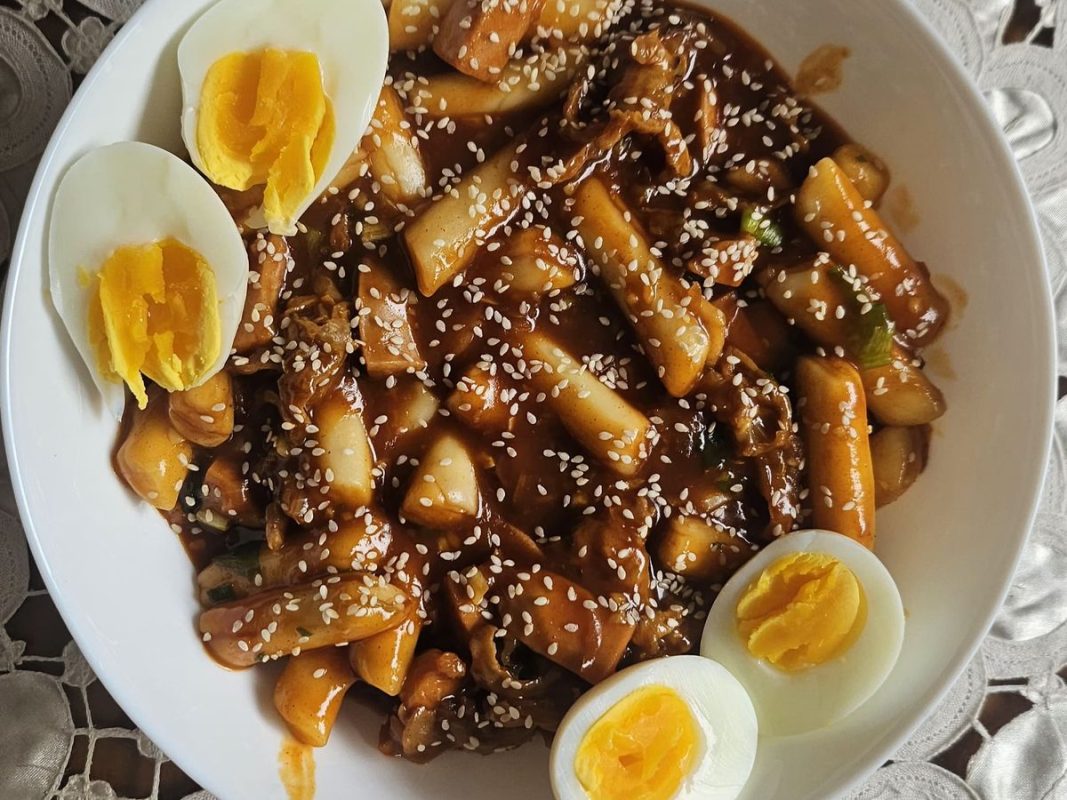
Tteokbokki is a beloved Korean street food of chewy cylindrical rice cakes simmered in a fiery, sweet gochujang-based sauce until glossy and richly coated.
Ready in about 25 minutes from start to finish, this beginner-friendly recipe makes 4 servings and comes together with 9 everyday ingredients. It’s the kind of Korean dish worth putting into regular rotation.
Why this recipe works:
- Soaking the rice cakes in warm water first keeps them soft and chewy instead of tough once simmered.
- Reducing the gochujang sauce until glossy is what makes it cling to every rice cake instead of pooling at the bottom.
- One pot, one sauce, quick simmer — a very approachable beginner recipe, ready in about 25 minutes.
- Makes 4 servings, classic Korean street-food flavor in a single pan.
✅ Quick Tip: Soaking firm or refrigerated rice cakes in warm water before cooking prevents them from being tough or hard in the finished dish. Keep it at a gentle simmer, not a hard boil — too much heat breaks down delicate ingredients and can make sauces separate.
Serving Suggestions: Serve hot as a snack or street-food style meal, with extra green onion on top.
Spicy Korean Tteokbokki
Ingredients:
Instructions
-
Before you start, gather and prep all 9 ingredients listed above - wash, chop, measure, and have everything within reach.
-
If the rice cakes are firm or frozen, soak in warm water for 10-15 minutes to soften.
-
Bring water or stock to a simmer in a wide pan.
-
Whisk in gochujang, gochugaru, soy sauce, sugar, and garlic.
-
Add the rice cakes and simmer for 10-12 minutes, stirring occasionally, until the sauce thickens and coats the rice cakes.
-
Stir in green onions in the last minute of cooking.
-
Taste and adjust the seasoning with more salt, acid, or spice as needed before serving.
-
Serve hot, topped with boiled egg halves if desired.
-
Garnish as desired and serve promptly for the best texture and flavor from your Spicy Korean Tteokbokki.
Nutrition Facts
Servings 4
- Amount Per Serving
- Calories 320kcal
- % Daily Value *
- Total Fat 2g4%
- Saturated Fat 0.5g3%
- Sodium 890mg38%
- Total Carbohydrate 68g23%
- Dietary Fiber 2g8%
- Sugars 12g
- Protein 6g12%
* Percent Daily Values are based on a 2,000 calorie diet. Your daily value may be higher or lower depending on your calorie needs.
Note
Soaking firm or refrigerated rice cakes in warm water before cooking prevents them from being tough or hard in the finished dish. Keep it at a gentle simmer, not a hard boil - too much heat breaks down delicate ingredients and can make sauces separate.
Frequently Asked Questions
Where can I find Korean rice cakes?
They're available fresh, refrigerated, or frozen at most Korean or Asian grocery stores.
How spicy is tteokbokki?
It's typically quite spicy - reduce the gochujang and gochugaru for a milder version.
Can I add other ingredients?
Yes, fish cakes, cabbage, and boiled eggs are all common additions.